



From the makers of Verdun and Tannenberg …
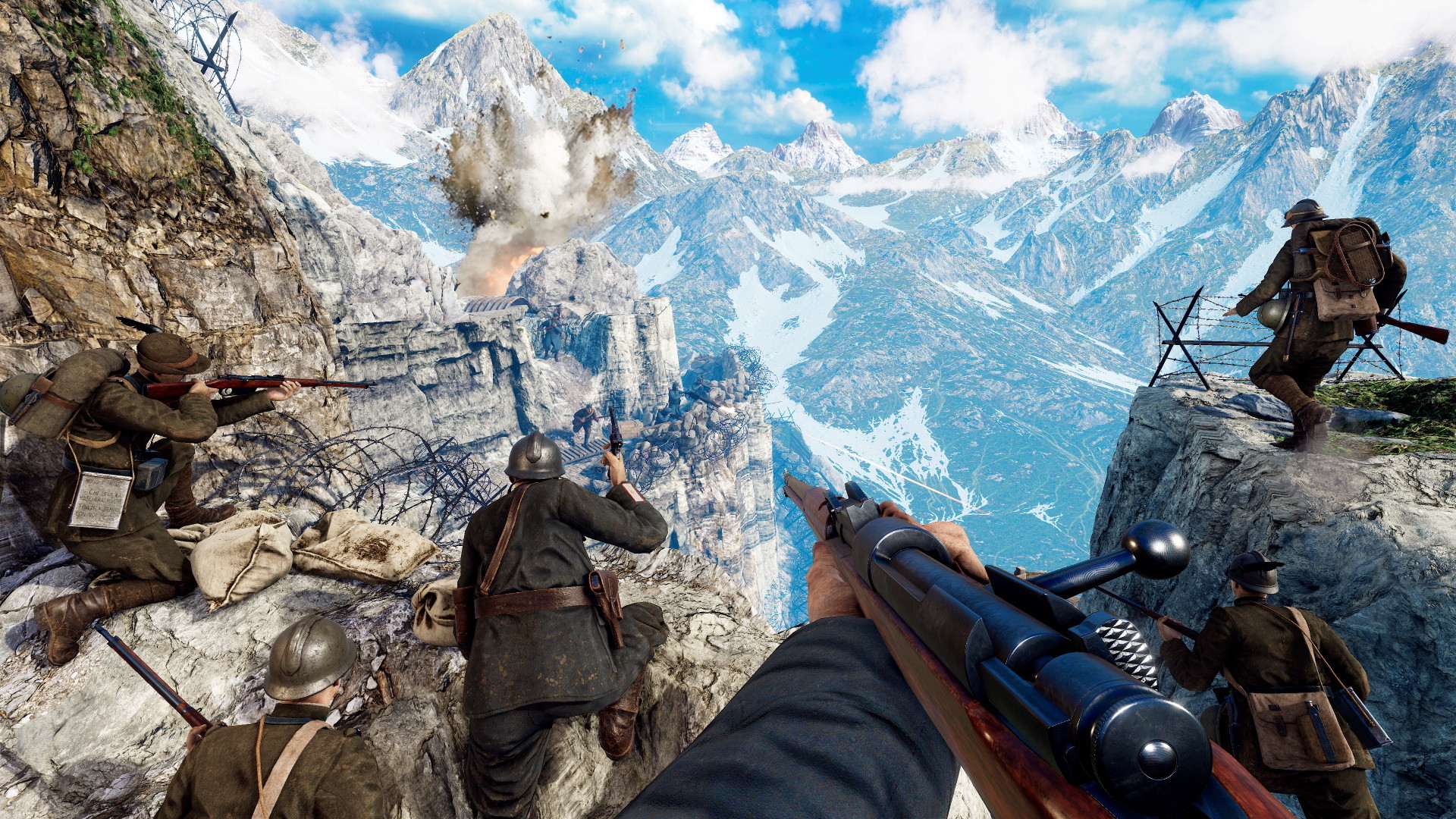
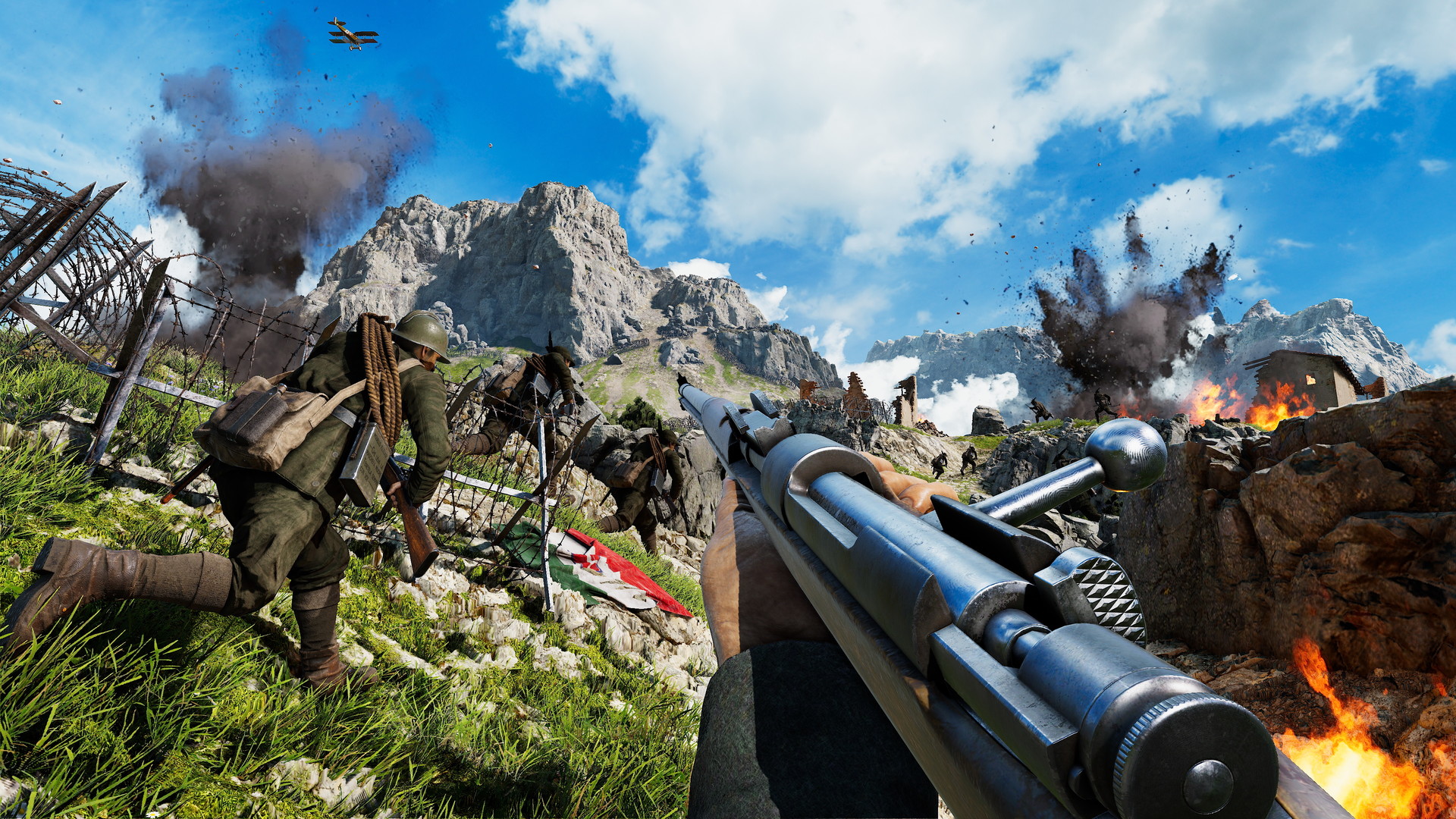
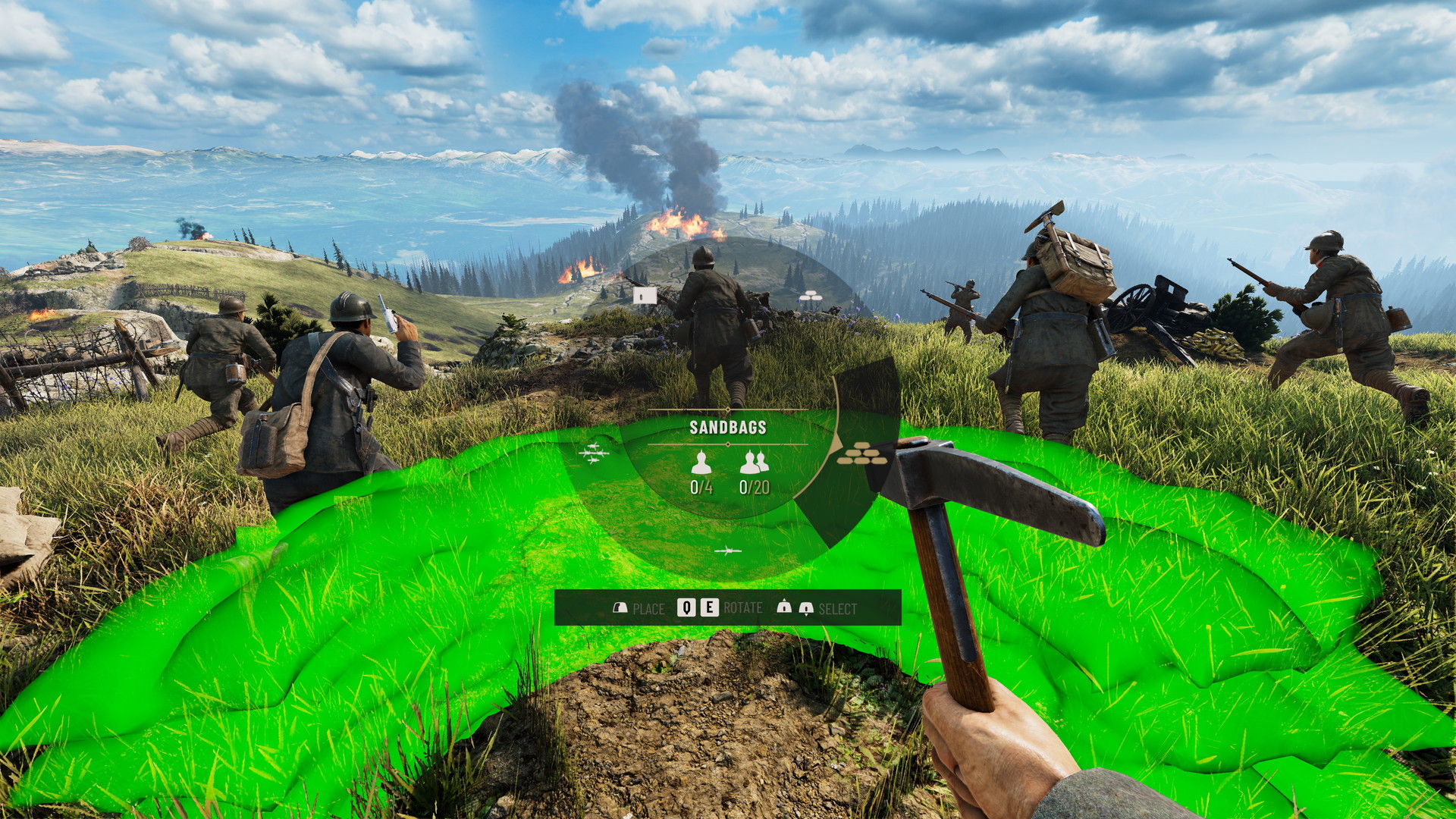
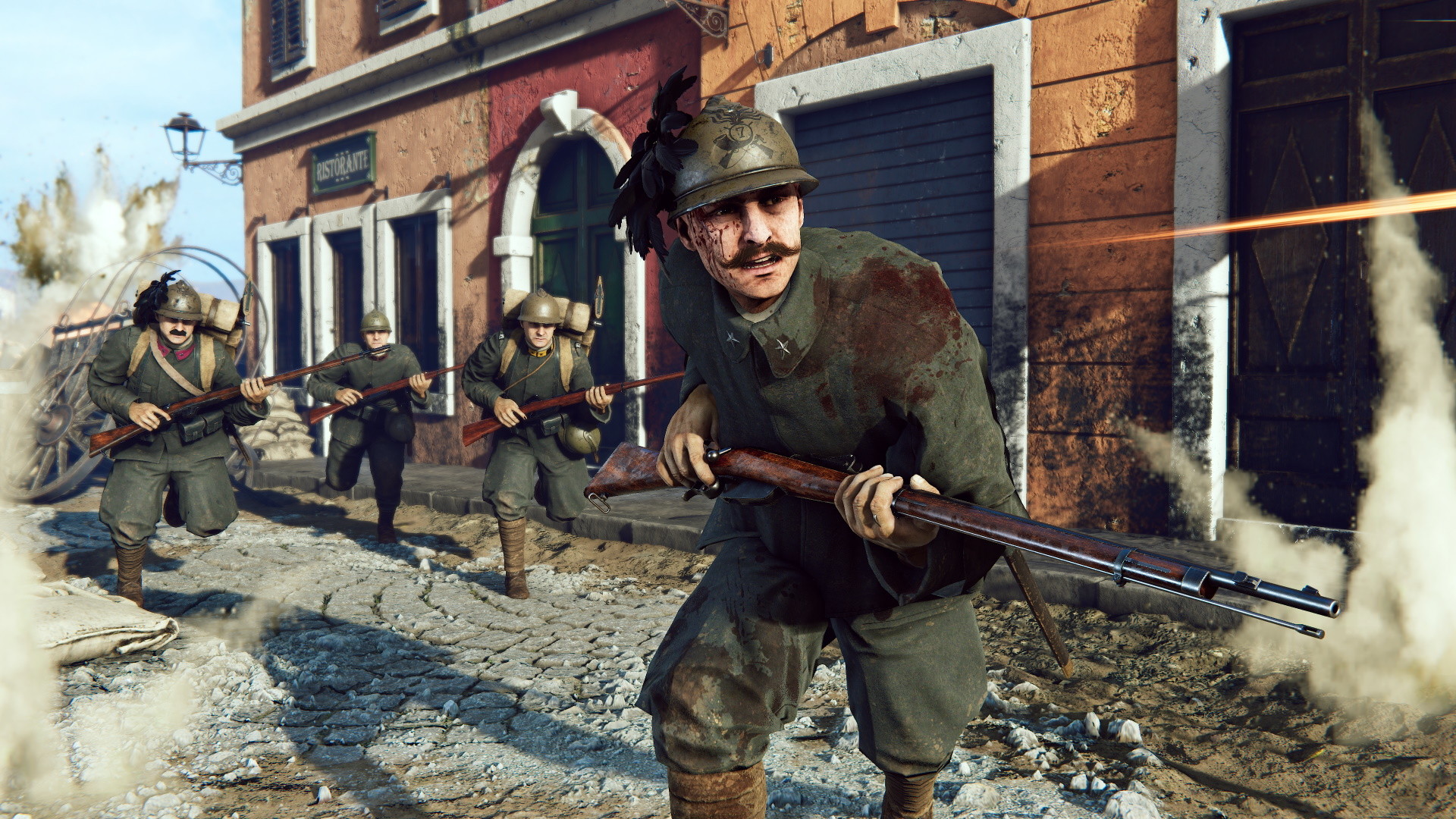
The new Offensive game mode puts you right in the middle of key historical offensives on the Italian Front. Lead the charge across stunning Italian landscapes as you choose your path to victory - cut paths through barbed wire, flank your enemies by following mountain trails, or man a mortar to blast a way through. Shape a dynamic battlefield by laying sandbags and wire, placing ammo crates, deploying trench periscopes or sniper shields, and more.

Take part in historical offensives from the Sixth Battle of the Isonzo to the Strafexpedition. Reflecting the course of the actual battles, as the attackers advance the fighting will shift through vastly different landscapes within a single offensive: from hillside fortresses to mountain trenches and fierce urban combat on city streets. Everything is recreated based on research and field trips, from sound effects and uniforms down to the houses, vineyards and trenches you’ll be fighting over.

Call in support with a unique historically accurate flare system: flare guns can mark targets for artillery or biplane flybys, or different colored flares can be used to guide your team. Once the big guns have softened up the enemy, finish the job at close quarters with an Arditi dagger or mountaineer’s pickaxe. Man heavy machine guns, mortars and even mountain guns for more direct fire support.
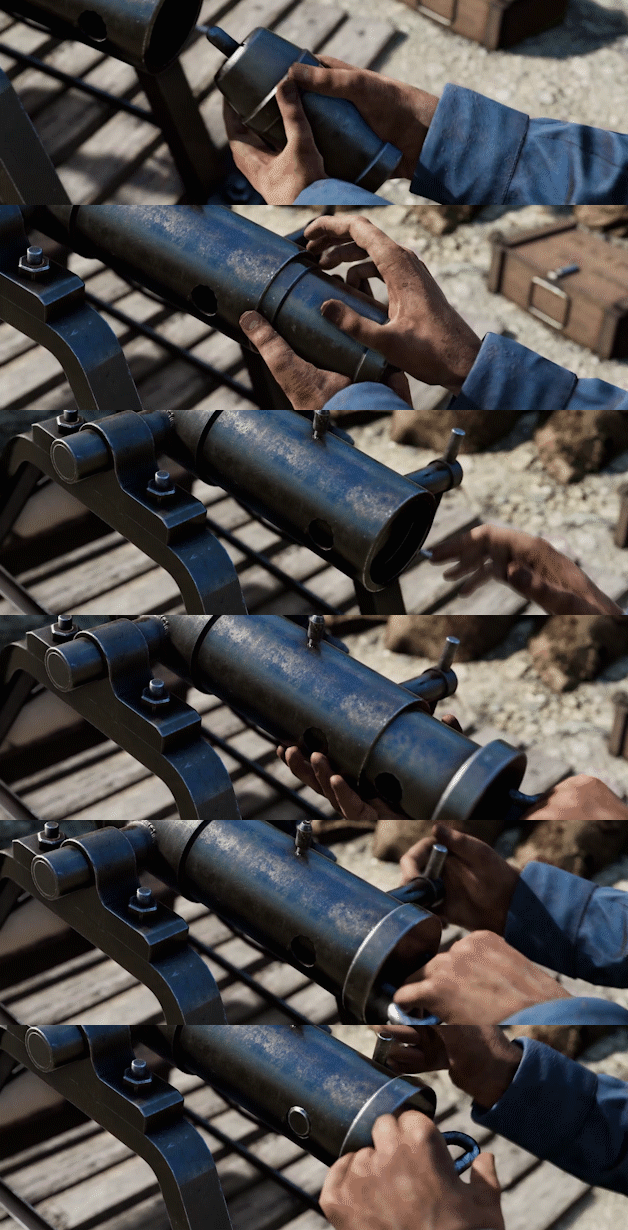
Choose from six classes based on historical combat roles and build your loadout from a selection of weapons, equipment and perks linked to that class, giving flexibility and variety while staying grounded in what real soldiers might have carried. You’ll be operating wire cutters, bandaging yourself and wounded teammates, and blowing the whistle to start an assault. One shot can kill and even lighter injuries can lead to quickly bleeding out.
Being an effective soldier in Isonzo is not just about being a good marksman. Mastering the terrain is also key - the mountain can be a friend or foe. Learn how to navigate well to maintain cover and surprise your enemies or support your allies.
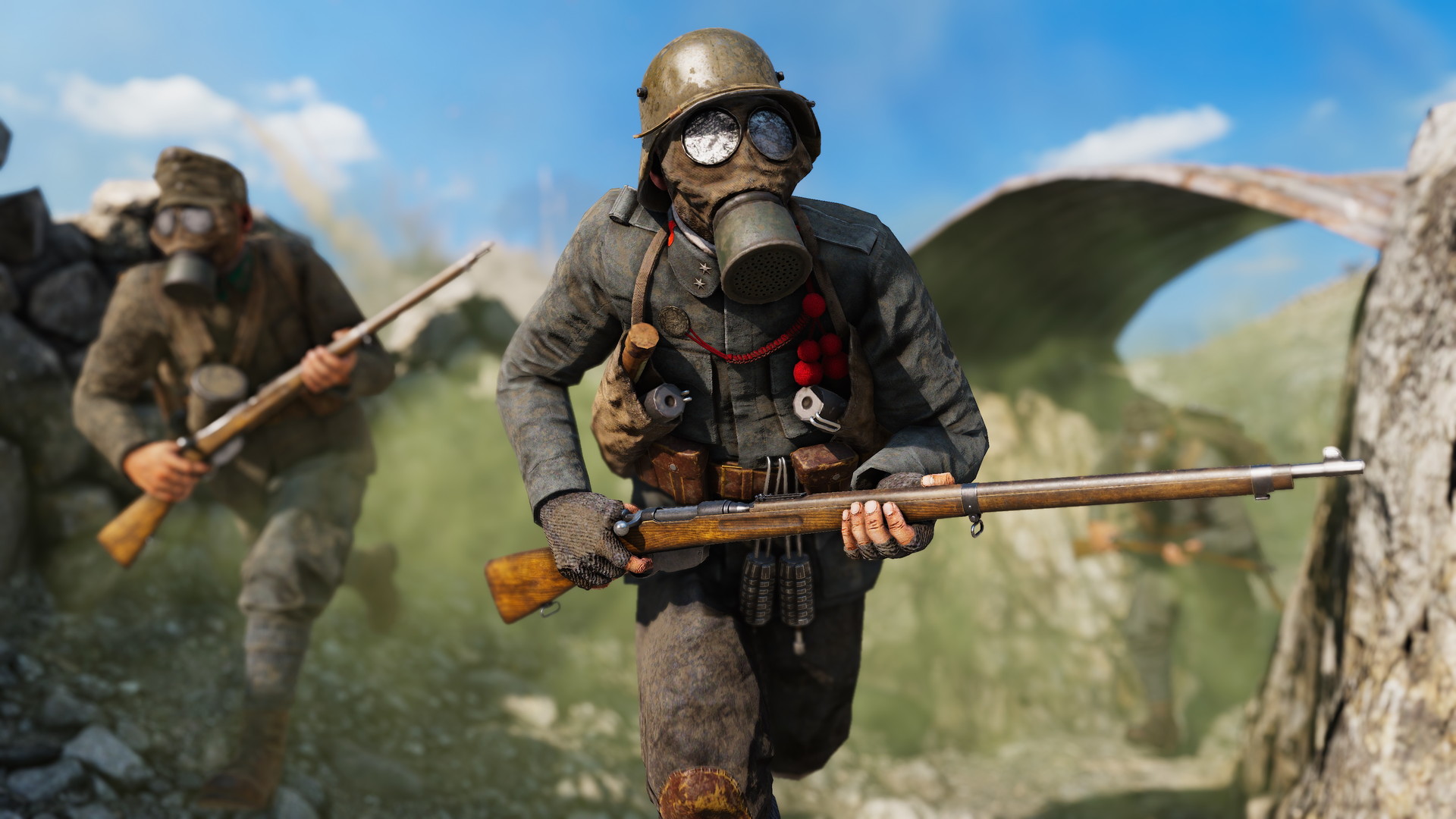
Finally… watch out for the dreaded poison gas. You’ve never experienced WW1 action quite like this!
Isonzo key features include:
- Mountain warfare: Assaulting mountain fortifications, battling through ruined towns, and fording rivers are just a few of the challenges you’ll face as you fight your way through numerous enemy positions
- Tactical multiplayer FPS: Choose your role and loadout carefully to survive this high altitude combat - play a sniper to pick off the enemy engineers before they can cut your wire, use rifle grenades to clear enemy machine guns, and much more
- World War One Gameplay: Historical Offensive game mode based on real battles and focused on the unique challenges of Alpine warfare. Fight with 30+ WW1 weapons, poisonous gas attacks, and intense artillery barrages
- Build for victory: Place your own wire, sandbags, trench periscopes, and more! Whether you’re digging in or on the attack, shaping the battlefield to your advantage will be key to victory
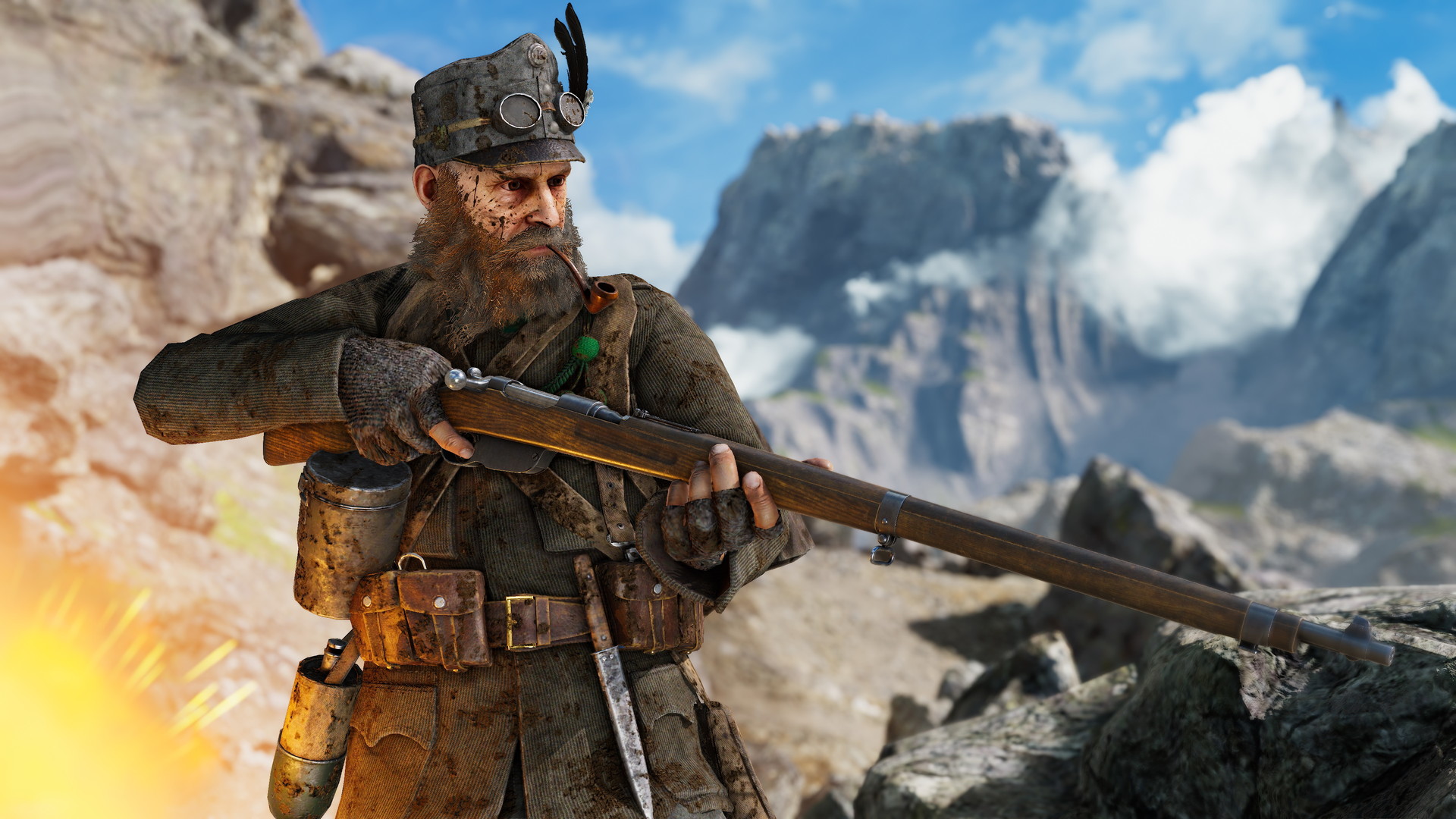
- Faces of war: Make every class your own by picking from a variety of historically class-appropriate uniforms, accessories and headgear. As a finishing touch, you can even pick your mustache from several famous period-accurate styles!
- Authentic WW1 atmosphere: Accuracy in everything from maps and weaponry to music and the uniforms – fight for the Kingdom of Italy or the Austro-Hungarian Dual Monarchy
More Games in the Authentic WW1 Game Series
Immerse yourself in more WW1 action with our other standalone titles Tannenberg and Verdun. Experience trench warfare on the Western Front in Verdun, or maneuver for control of key sectors in Tannenberg on the Eastern Front. These authentic WW1 shooters let players choose from a range of squads from across the war, as they fight for control of the ever-changing frontlines.
🎮 Full Controller Support
- K Station Windows Content [17.84 G]
Hello everyone!
We hope you enjoyed the reveal of Gallipoli last month and are excited to learn more about the game! There are a lot of reveals and deep dives planned for the months ahead, but wed like to rewind to the early stages of World War 1 and explore how we even got to the events in the Middle Eastern theater.
Wed like to formally introduce you to Dr Chris Kempshall, a historian who has been helping and advising us on all things historical during the development of Gallipoli. So, whether its a history lesson or a refresher for you: take it away, Chris!
[img src=\"https://cdn.cloudflare.steamstatic.com/steamcommunity/public/images/clans/45744994/fec23bf9a5db7c35ca6d97038dd70d09041b2c17.png\"][/img]
[hr][/hr]Greetings to you all! I have been working as the historian for BlackMill Games on Gallipoli since June last year and it is very exciting to come out of the shadows now that the game has been announced!
My background is as an academic First World War historian specialising principally in allied relations and on the way that the war is portrayed in computer games. Im also the current President for the [u]International Society for First World War Studies [/u] and an Associate of the [u]Imperial War Museum Institute [/u]. So, working on Gallipoli is a very exciting prospect for me!
Whilst there are more reveals of the game to come, when it comes to the historical aspect a good place for us to start is by exploring the background and motivations of the Gallipoli and Mesopotamian campaigns. Why were they attempted? What was the thought and strategy behind them? Were they really a viable option of winning the war? And what had brought the Ottoman Empire into the conflict in the first place?
Taking Sides
As with many of the major European powers at the outbreak of the First World War, the Ottoman Empire had its own internal instabilities and considerations that would inform its decision to ally with the Central Powers. It had previously had a notable relationship with the British Empire. Both the British and the French had fought against the Russians - long-term rivals of the Ottomans - during the Crimean War to help preserve Ottoman territory and the balance of power in Europe.
But those relationships had deteriorated over time and the Ottoman Empire had become politically isolated by July 1914. As with other nations like Italy, the Ottomans were also concerned with which potential alliance and outcome might help them secure their ongoing status as a Great Power. This was easier said than done.
Whilst [u]Mehmed V [/u] reigned as Sultan, his powers had been dramatically reduced before the war and the [u]Committee of Union and Progress (CUP) [/u] effectively ruled the Ottoman Empire. Although they favoured an [u]alliance [/u] with Germany, the Germans viewed the Ottomans as a military liability and were not as keen! However, the concern of them instead joining the Triple Entente proved motivation enough to have them secretly join the Central Powers.
[img src=\"https://cdn.cloudflare.steamstatic.com/steamcommunity/public/images/clans/45744994/1afc81ccfaf8c0f4a3547cc8cd6b056af732d239.jpg\"][/img]
Source unknown, but referenced in various academic works
Anger at the Triple Entente increased within the Ottoman Empire when, in early August, the British seized two new dreadnoughts that had been under construction in one of their shipyards that had been ordered and paid for by the Ottomans. Despite this the secrecy of the new alliance held until October when the Ottoman Empire launched an attack on Russian forces in the Black Sea and, as a result, was formally involved in the conflict against the full Triple Entente.\n
Opportunism and Internal Strife
As seen at their entry into the war, the Ottomans were eager to launch early attacks against the Russian Empire and began a, largely unsuccessful, winter campaign against them in the Caucasus. Fighting here would rumble on in various forms for years.
Aside from that it was not entirely clear in what form the war would come to the Empire, if at all. The British and French appeared to be focusing most of their interests on the struggle against Germany on the Western Front.
However, the British in particular drew a great deal of its oil supplies from Mesopotamia which could now be threatened by the Ottomans. They resolved to [u]secure these oil fields [/u] and landed a division of Indian infantry in November 1914. They were immediately surprised by what they found.
The Ottoman Empire was enormous and covered huge swathes of territory. Whilst landmass could be important when it came to Great Power posturing, for the Ottomans it brought some significant problems. Firstly, how could you adequately defend an Empire that covered so much ground? At the start of the war the Ottoman army only numbered around 150,000 men. That was in no way capable of defending all its borders and also launching an attack on the Russians.
[img src=\"https://cdn.cloudflare.steamstatic.com/steamcommunity/public/images/clans/45744994/7890a449f0cde68d0e683117eaa0d4870782fb7c.png\"][/img]Map of Ottoman Empire in 1914, Manat Taonga Ministry for Culture and Heritage, https://nzhistory.govt.nz/media/photo/map-ottoman-empire-1914
Within the Ottoman Empire were also a significant number of competing identities and races. There were Turks, Arabs, and - particularly in Mesopotamia - there were various different tribes of Shiite muslims who had no real love for the Empire. The 23,000 Ottoman troops stationed in Mesopotamia by September 1914 were not intended to act as a defence against invasion, but instead to deal with issues along the border of Persia and also keep the local tribes at bay. It was hoped that these same tribes would, in the case of foreign interference, act against the invaders themselves as an irregular force. But this is not what happened.
[u]When the British arrived [/u] they discovered very little in the way of defences. The Ottoman hope that the local tribes would rally to defend the Empire was largely in vain. Whilst some of the notable tribes would coordinate with the Ottomans most continued to operate independently and seemingly saw no reason to get involved.
[img src=\"https://cdn.cloudflare.steamstatic.com/steamcommunity/public/images/clans/45744994/311463a1fc5bb15caf458afa1987af8a6264c9bc.jpg\"][/img]National Army Museum, 1966-02-97-31, https://collection.nam.ac.uk/detail.php?acc=1966-02-97-31
So the British, after reinforcing their position, resolved to keep moving forwards and began capturing southern Iraq. Mascat and Oman both fell in short order before Basra was captured on 23 November 1914. This was followed by Qurna, which lay at the joining of the [u]Euphrates and Tigris rivers [/u], on 11 December.
[img src=\"https://cdn.cloudflare.steamstatic.com/steamcommunity/public/images/clans/45744994/971c360ef17087673ec0871d1e0bebd4893b869e.jpg\"][/img]National Army Museum, 1987-01-70-33, https://collection.nam.ac.uk/detail.php?acc=1987-01-70-33
Suddenly the upper reaches of the region could be targeted. The British eyed the opportunity to capture Baghdad itself and deliver a serious blow to the Ottomans by compromising their territorial integrity. To reach it though they would have to travel further inland along the Tigris through the town of Kut and, beyond it, the ancient ruins of Ctesiphon.
Realising the danger they were now in, the Ottomans mobilised new forces in the region and prepared to meet them. We will return to the details of these battles in a future post!\n
Breaking the Deadlock
Whilst the Mesopotamian Front would prove an ongoing challenge for the Ottoman Empire, the greatest moment of danger was still yet to come. Its roots could be found on the Western Front. The British and French had spent much of the last months of 1914 and early 1915 struggling to find a way through the deadlock of trenches in Belgium and France.
Assaults had been launched that had cost many lives but shown no real sign of rupturing the German defences. With their territory occupied by the invaders, the French had little interest in sending their infantry reserves anywhere other than the front line. But the British were still in the process of [u]building themselves an army [/u] and did not necessarily want to destroy it against barbed wire if an alternative could be found. Furthermore, soldiers from their Empire were now being mobilised in greater numbers. What if they could be put to better use than in France? And what of the vaunted [u]Royal Navy [/u]? It was the major military strength of the British Empire but, in a land war in Europe, had very little opportunity to impose itself.
[img src=\"https://cdn.cloudflare.steamstatic.com/steamcommunity/public/images/clans/45744994/5730ea6a02910514571a9b960171f12264928874.jpg\"][/img]
Australian War Memorial, C02141, https://www.awm.gov.au/collection/C1012137
The leading members of the Triple Entente did not fully understand how the alliances within the Central Powers worked. They believed that Germany was being supported and maintained by allies like Austria-Hungary and the Ottoman Empire. If one of them could be defeated, it would knock the supports out from under Germany and they would collapse. This was actually completely the wrong way round. Throughout the war it was Germany that was supporting its allies with military equipment and resources. But, if we accept the British and French view, then it makes what comes next make much more sense.
When looking at Germanys allies, Austria Hungary was effectively out of reach. Though they were fighting against the Russians in Eastern Europe, there was no easy route for British and French forces to intervene there. Whilst Italy would join the war in 1915, they were still neutral at this point. So Austria-Hungary was not a viable target. The Ottoman Empire on the other hand looked much more promising.
A plan was formed that would see the Royal Navy force the [u]Dardanelles Straits [/u] that separated the Mediterranean from the Sea of Marmara. Beyond them, and across that sea, lay the capital of the Ottoman Empire: Constantinople. If it could be captured, the Ottoman Empire could be knocked clean out of the war. Furthermore a new supply route could be opened up to the Russians as well as a pathway into southern Europe and the supposedly soft underbelly of Austria-Hungary and, more importantly, Germany.
[img src=\"https://cdn.cloudflare.steamstatic.com/steamcommunity/public/images/clans/45744994/c1b91a0e88db58520409171db376ba50e671f02f.png\"][/img]
The Times (Q 109143), https://www.iwm.org.uk/collections/item/object/205351875
The Dardanelles Straits were, however, narrow and the Ottomans had forts on both banks. They had also secretly laid numerous minefields in the region to prevent enemy fleets from pushing through. The initial attempt on 18 March 1915 by the joint British and French navies was a disaster; with three battleships HMS Irresistible, Bouvet, and HMS Ocean being sunk and three more Gaulois, Suffren, and HMS Inflexible were severely damaged. With no hope of progressing, the Entente forces retreated.
[img src=\"https://cdn.cloudflare.steamstatic.com/steamcommunity/public/images/clans/45744994/88d7e49258e0df7e6c34c504514c0decaac4ef2f.jpg\"][/img]By Royal Navy - Library of Congress, Public Domain, https://commons.wikimedia.org/w/index.php?curid=72443
If they were to get through the Straits then the forts in the area would have to be seized or destroyed. To do this would require massed infantry landings at key points along nearby coastlines. Those forces would be required to push in land, capturing key strategic points before eventually overwhelming the fort defences to clear the way for the fleet.
These landings would take place along the Gallipoli peninsula. They would represent the greatest challenge to the Ottoman Empire of the entire war and also become the foundation of modern Australian national identity.\n
[hr][/hr]Now that youre up to speed with the events leading up to Gallipoli, its almost time we share a bit more about the game. In the meantime, we\'d like to ask you to wishlist Gallipoli if you haven\'t already! It would truly help us out a lot. Anyways, see you soon!
Follow our socials:
Minimum Setup
- OS: Requires a 64-bit processor and operating system
- Processor: Intel Core 2 Quad Q9550Memory: 4 GB RAM
- Memory: 4 GB RAM
- Graphics: NVIDIA GeForce GT 640
- Storage: 20 GB available space
Recommended Setup
- OS: Requires a 64-bit processor and operating system
- Processor: Intel i7-4770Memory: 16 GB RAM
- Graphics: NVIDIA GeForce GTX 1050
- Storage: 20 GB available space
[ 6362 ]














[ 5873 ]


[ 1991 ]


















[ 1943 ]











[ 988 ]











Time left:
356099 days, 6 hours, 24 minutes

Time left:
356099 days, 6 hours, 24 minutes

Time left:
3 days, 14 hours, 24 minutes

Time left:
31 days, 14 hours, 24 minutes

Time left:
34 days, 14 hours, 24 minutes

Time left:
35 days, 14 hours, 24 minutes

Time left:
9 days, 0 hours, 24 minutes
Time left:
4 days, 8 hours, 24 minutes

Time left:
10 days, 8 hours, 24 minutes

Time left:
11 days, 8 hours, 24 minutes

Time left:
16 days, 8 hours, 24 minutes

Time left:
18 days, 8 hours, 24 minutes

Time left:
22 days, 8 hours, 24 minutes
Time left:
1 days, 21 hours, 25 minutes

Time left:
6 days, 14 hours, 25 minutes

Time left:
8 days, 13 hours, 25 minutes
Time left:
13 days, 20 hours, 35 minutes


