



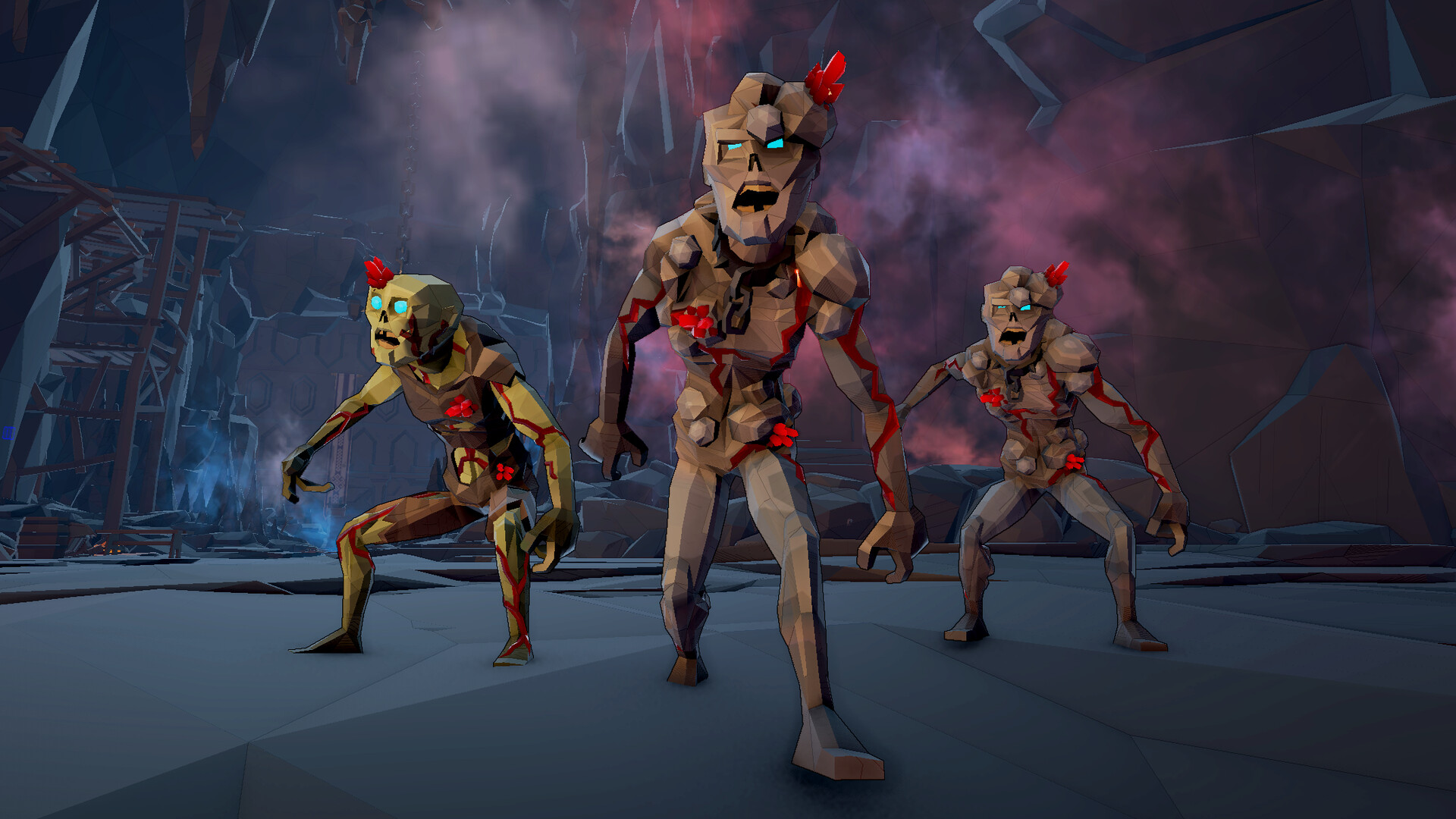
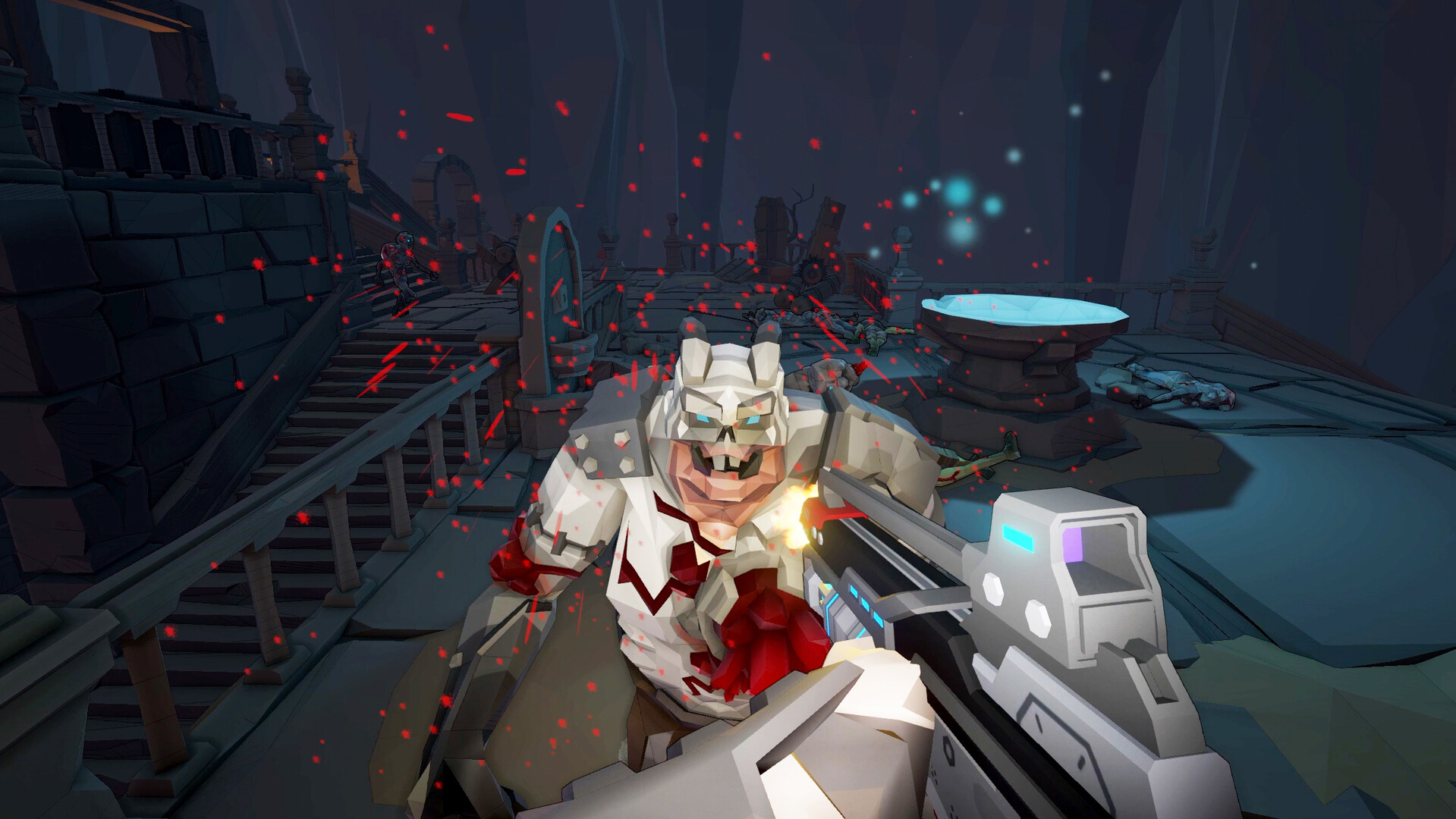
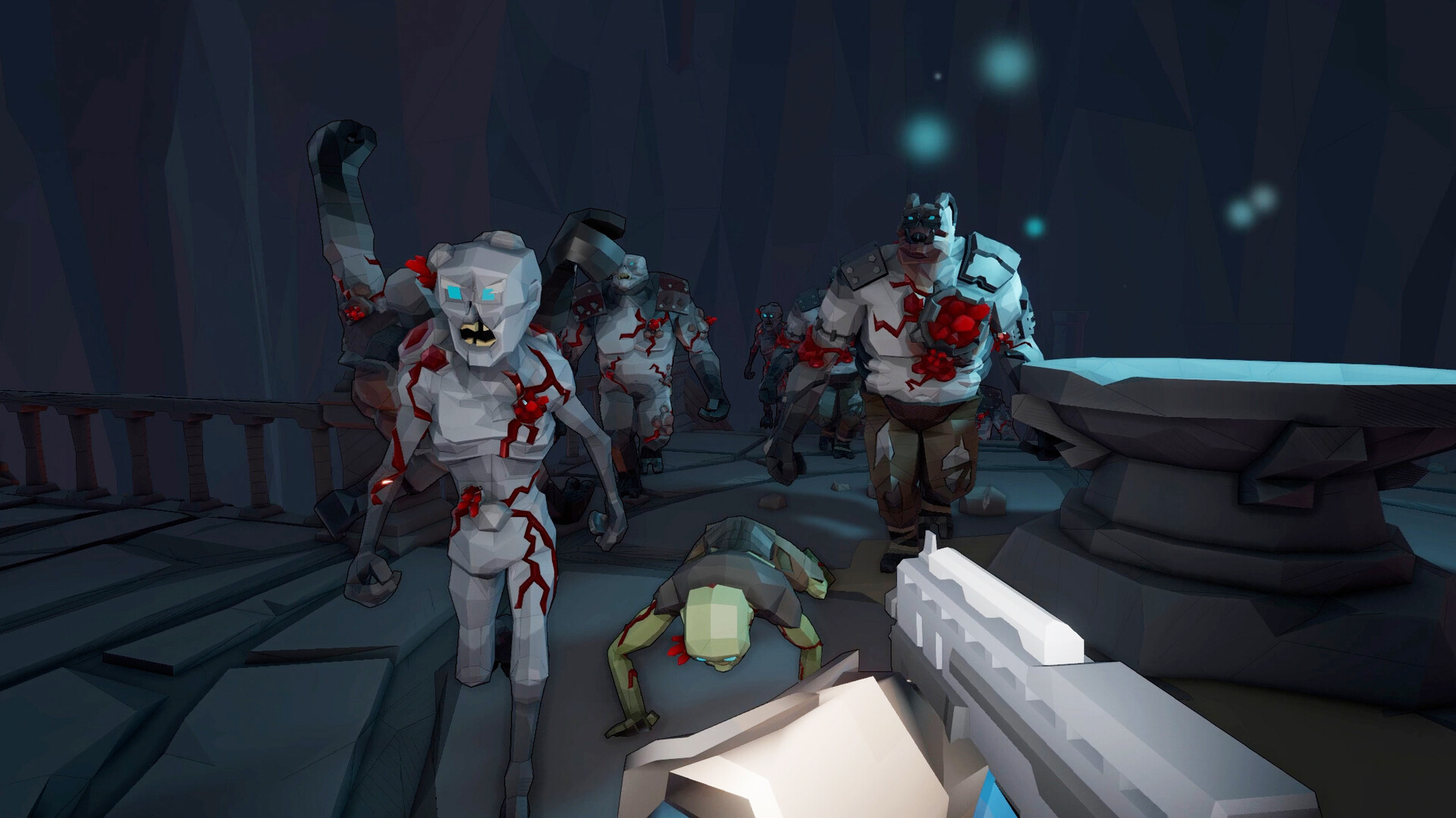
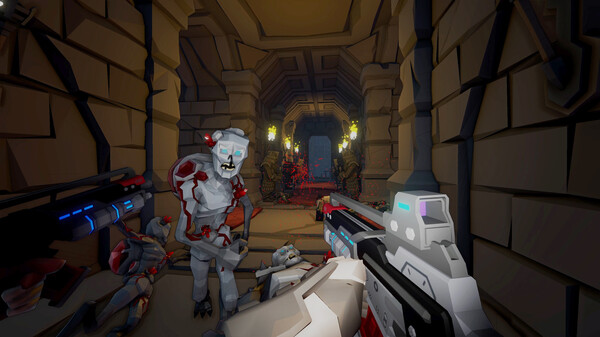
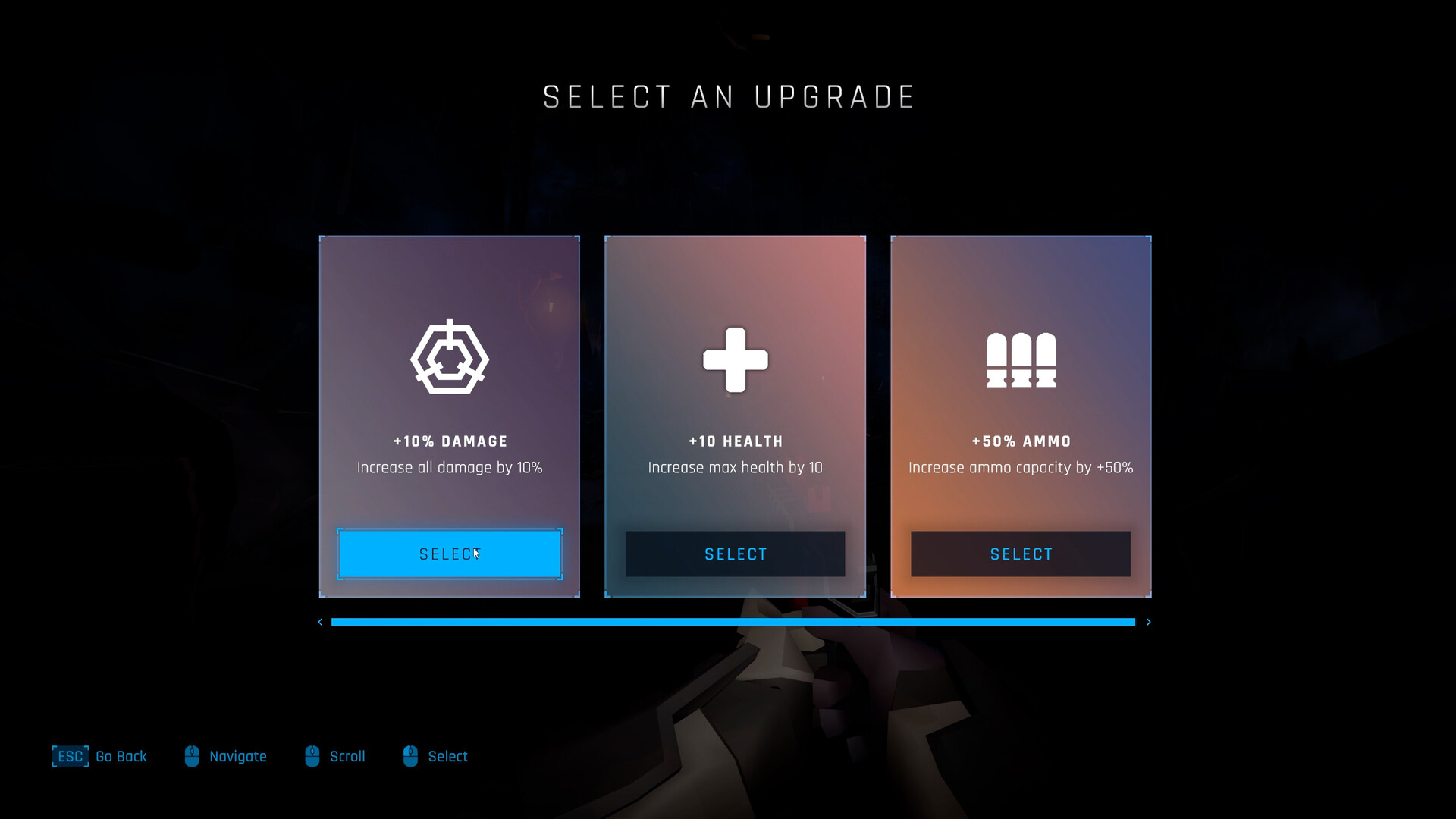
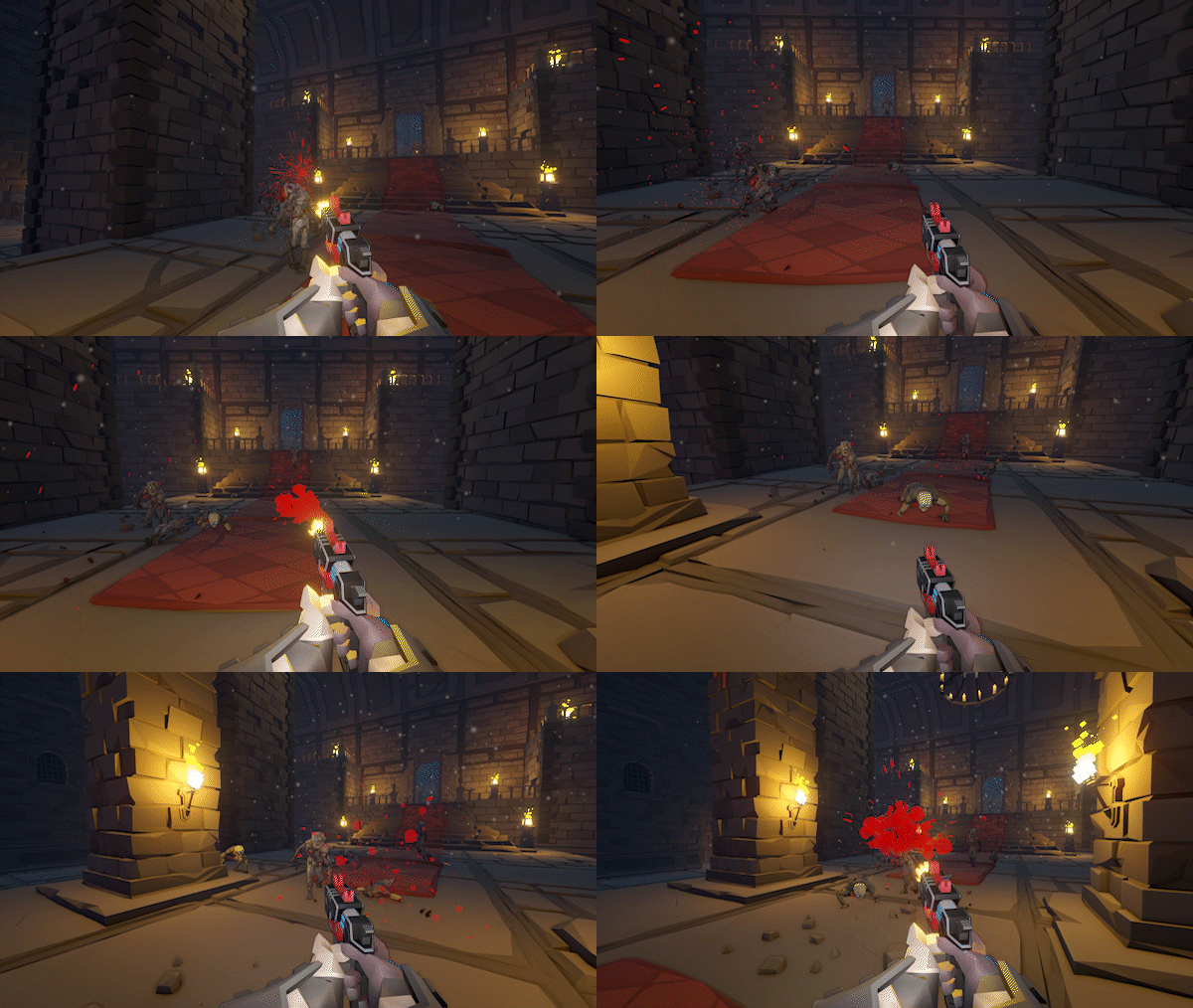
Bloodstone Rising is a high-intensity 1-4 player co-op FPS roguelike where space dwarves battle waves of relentless zombie hordes to reclaim their ancestral kingdom.
Game Features
High-Intensity FPS Roguelike
Co-op: Team up with friends to take on relentless waves of zombie hordes.
Wave-Based Combat: Survive escalating waves of undead enemies, each deadlier than the last.
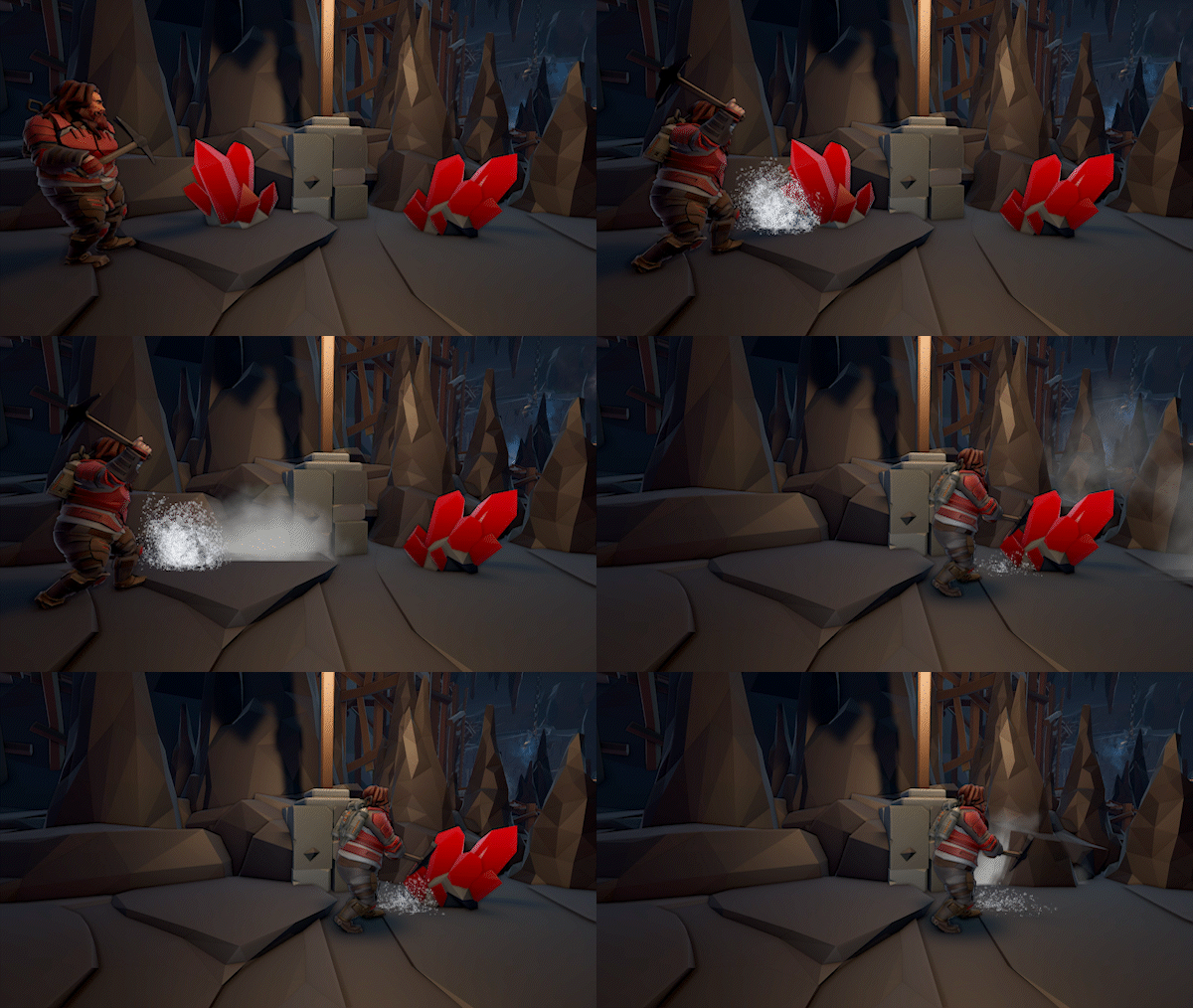
Mining & Upgrades: Mine resources between waves to craft upgrades and enhance your dwarf’s abilities.
Deep Progression System: Unlock powerful weapons, perks, and abilities to grow stronger each run.
Diverse Weapons: Wield a variety of sci-fi and dwarven-inspired weapons, each with unique abilities.
Epic Boss Fights: Battle massive, mutated zombie bosses with unique attack patterns and mechanics.
Dynamic Environments: Fight across abandoned mines, underground fortresses, and ancient dwarven ruins.
Challenge Modes & Difficulty Tiers: Push your skills to the limit with multiple difficulty levels.
Procedural Variety: Encounter random events, powerful artifacts, and surprises in every run.
Working on a roguelite about space dwarves fighting endless undead means Im constantly buried in ideas. They come from everywhere. Sometimes its something I spot in another game, sometimes its just a dumb thought I cant shake. But not every idea makes it into Bloodstone Rising. It has to prove it belongs.
From Wouldnt it be cool if to a real feature
Most of my ideas start as scraps in a messy document. Weapon sketches, weird enemy concepts, modifiers, half-written events. The ones that survive are the ones that actually solve a problem or add something fresh to the chaos.
One of my earliest notes was:
What if the player has to manage the stress of resource gathering and fighting aggressive hordes in a roguelike setting?
That simple note became one of the pillars of the game.
Making sense of the chaos
When I think an idea is worth chasing, I put it through a quick filter. Does it solve a problem? Does it fit with the roguelite loop of maps, upgrades, and replayability? Will it still feel fun after ten or twenty runs, or will it just break the game?
That stops me from wasting time on flashy features that dont actually hold up once youve played them a few times.
[img src=\"https://cdn.cloudflare.steamstatic.com/steamcommunity/public/images/clans/45585643/2ca56292d4a38d9e832899fe7e94ae8ecd9220b4.gif\"][/img]
From paper to pixels
Once something makes the cut, I throw it into Unity as quickly as possible. Sometimes its ugly placeholder code, sometimes its just boxes on a map. If it feels good, I keep forging ahead (ha!).
The forge upgrade system is a good example. Early versions spat out ridiculous, broken combos that made the game way too easy. I almost cut it, but playtesters loved the chaos. Instead of scrapping it, I leaned into it and started balancing the game around those surprising, overpowered moments.
[img src=\"https://cdn.cloudflare.steamstatic.com/steamcommunity/public/images/clans/45585643/21d75f99ae05e58da234369b80bb04b8f8423947.gif\"][/img]
Why this matters
Bloodstone Rising is meant to surprise you. Runs should feel unpredictable, where strange interactions between mining, forging, and fighting create stories you didnt expect. The only way to get there is to test ideas, keep the ones that work, and let the rest go.
Where you come in
Playtesters have already shaped the game more than I thought they would. Some features I considered minor ended up being player favorites.
That feedback loop is what makes the game better, and its why I keep asking for more.
If youve got an idea, feedback, or even just a crazy what if, throw it at me. You never know which one might make its way into the game.
[dynamiclink href=\"https://store.steampowered.com/app/3338020/Bloodstone_Rising/\"][/dynamiclink]
Minimum Setup
- OS: Linux 64 Bit. SteamOS
- Processor: Intel Core i3-3220Memory: 8 GB RAM
- Memory: 8 GB RAM
- Graphics: NVIDIA GTX 1050 / AMD RX 560
- Storage: 2 GB available space

[ 6377 ]





























[ 5871 ]


[ 751 ]





























[ 2194 ]



























Time left:
356103 days, 5 hours, 27 minutes

Time left:
356103 days, 5 hours, 27 minutes

Time left:
7 days, 13 hours, 27 minutes

Time left:
35 days, 13 hours, 27 minutes

Time left:
38 days, 13 hours, 27 minutes

Time left:
39 days, 13 hours, 27 minutes

Time left:
12 days, 23 hours, 27 minutes

Time left:
0 days, 7 hours, 27 minutes

Time left:
1 days, 7 hours, 27 minutes

Time left:
8 days, 7 hours, 27 minutes

Time left:
14 days, 7 hours, 27 minutes

Time left:
15 days, 7 hours, 27 minutes

Time left:
20 days, 7 hours, 27 minutes

Time left:
26 days, 7 hours, 27 minutes
Time left:
2 days, 17 hours, 27 minutes

Time left:
10 days, 13 hours, 28 minutes

Time left:
12 days, 12 hours, 28 minutes
Time left:
17 days, 19 hours, 38 minutes


